How to measure website changes without claiming every increase as a win
Plan verification and follow-up before making a change, then distinguish a working repair, an observed result and a causal effect.
5 min read · 6 source referencesSix source-backed guides to choosing the next website action, understanding its limits and checking what happened.
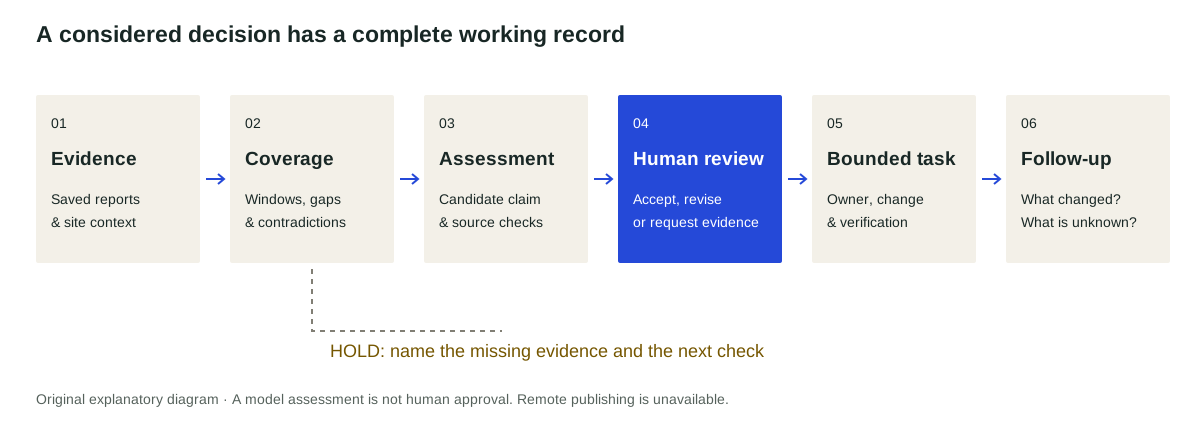
Turn scattered website reports into one defensible action, with evidence, an owner and a way to check the result.
Read the guidePlan verification and follow-up before making a change, then distinguish a working repair, an observed result and a causal effect.
5 min read · 6 source referencesA search decline can reflect access problems, changing demand, lost visibility or fewer clicks. Use the pattern to choose the next check.
5 min read · 6 source referencesUse analytics, behavior, task testing and customer research to identify a specific obstacle before proposing a conversion change.
5 min read · 6 source referencesChoose editorial work by the reader's task, existing coverage and useful evidence—not a publishing quota or the age of a page.
5 min read · 5 source referencesSeparate verified failures on important pages from eligibility problems and lower-confidence opportunities.
5 min read · 8 source referencesTurn scattered website reports into one defensible action, with evidence, an owner and a way to check the result.
5 min read · 5 source referencesPrimary platform documentation, research and practitioner examples inform these guides. Source limits matter: an observational study is not a forecast, and general advice is not a diagnosis of your site.
See the discipline in a worked example ↗