A fall in organic traffic is a reason to investigate. It does not yet tell you to rewrite content, change titles or remove pages.
The first job is to locate the loss and identify which explanation is worth checking. That protects a useful page from an unnecessary rewrite and helps an urgent technical failure reach the right person quickly.
Start with a plain question: what changed, for which pages and visitors, over which period? Keep the answer separate from the explanation you suspect.
1. Establish what actually declined
“Organic traffic” can mean Google search clicks, analytics sessions attributed to organic channels, or an external tool's traffic estimate. These are different measurements.
Search Console is useful for investigating Google's observed search performance. Website analytics can help investigate what happened after a visit. An external estimate may provide competitive context. Avoid substituting one for another when telling a client what happened.
Write the observation precisely: “Google web-search clicks to the service pages fell from this settled period to that comparable period.” Then record whether business outcomes fell too. More detailed interpretation can follow once the observation is stable. Google's Performance report overview explains the Search metrics involved.
2. Make the comparison fair enough to use
Compare complete periods with the same filters. Check the search type, country, device, property and timezone assumptions. A full week and part of the current week are not interchangeable.
For a seasonal business, a previous-period comparison needs longer context. A useful initial view might include both the recent trend and the corresponding period last year, if comparable history exists. A major promotion or market change can make that comparison less useful.
Google lists “Seasonality and changing interests” among possible causes of traffic drops. That is a category to investigate, not an excuse to dismiss a decline. Its diagnostic guidance is a good starting point.
Also check whether collection changed. A report that began omitting pages is a different problem from a site that lost visitors. Google warns that detailed API requests can lose data; keep detailed rows and property totals conceptually separate.
3. Find where the loss is concentrated
A property total can make a narrow problem look universal. Break the change into useful groups: service pages, products, guides, locations or templates. Then inspect device and country where those differences matter.
Rank the groups by absolute lost clicks as well as percentage change. Losing half the traffic to a tiny page can look dramatic while another page loses far more relevant demand with a smaller percentage movement.
Demonstration: a fictional appointment business sees a decline across its site total. The larger loss comes from two seasonal guides; its booking pages retain similar search clicks. That does not establish that the business is healthy, but it changes the investigation. Rewriting the booking page would not address the observed search loss.
The next check is whether the guides face lower demand, weaker visibility or a changed result experience. If enquiries also fell, investigate that separately rather than assuming both movements share one cause.
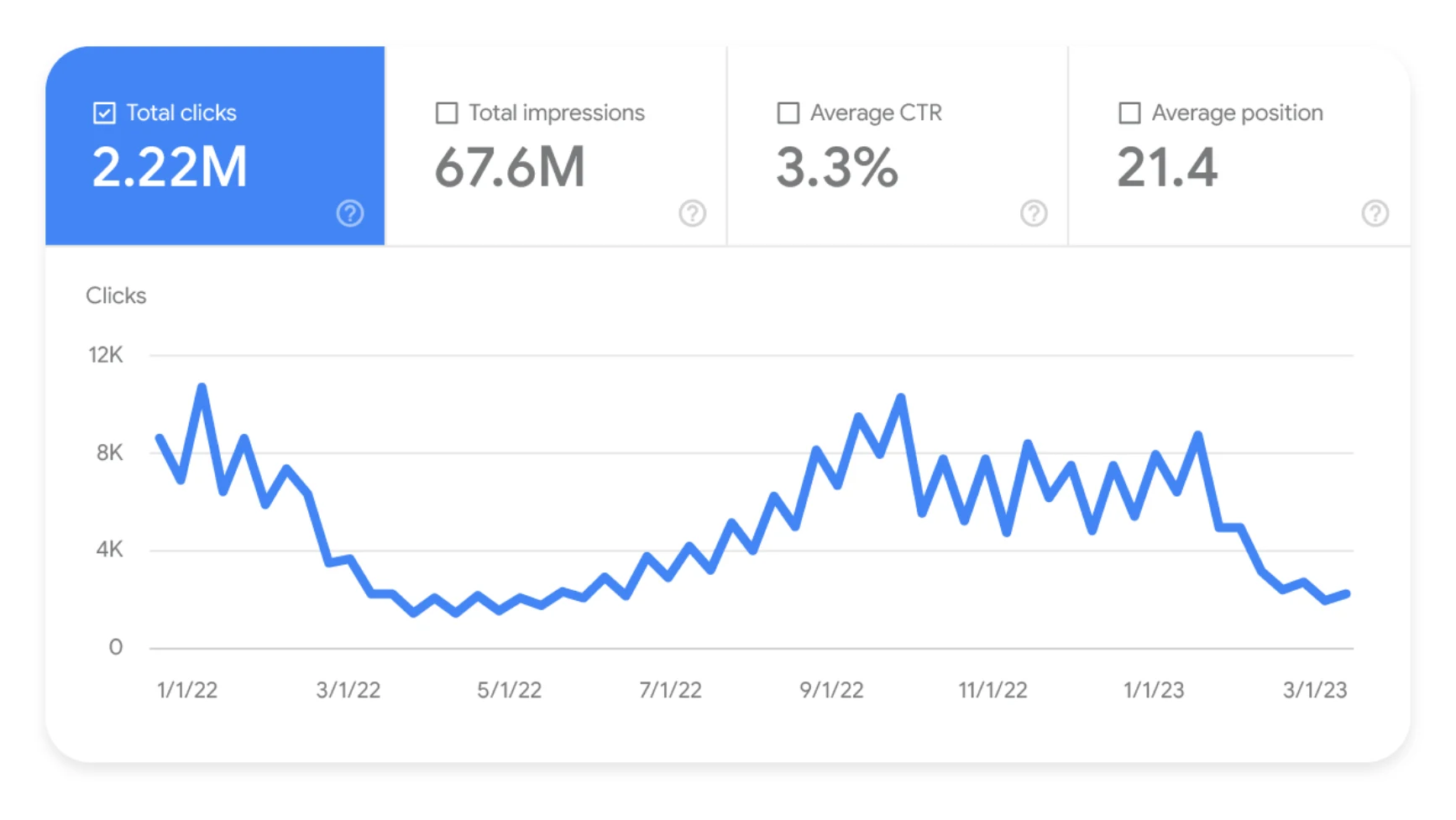
Google Search Central · CC BY 4.0 · License
4. Check access before treating content as the cause
Inspect the affected pages and recent changes. Can an anonymous visitor load the useful content? Does an important page return an unexpected error? Did a template acquire an exclusion directive or an inappropriate canonical destination?
Use the relevant indexing and crawl evidence, together with direct response checks. A successful page load in your own browser does not answer every search-engine question. A crawler failure also needs context: security rules may affect a particular request differently from ordinary visitors.
If the problem is technical, assign a specific verification task. Avoid opening a broad “improve SEO” ticket. The technical triage guide explains how to distinguish urgent access problems from lower-priority warnings.
5. Separate visibility, demand and click behavior
Once the pages are accessible, inspect matched query and page cohorts. Fewer impressions can be consistent with lower demand or reduced visibility. Fewer clicks while impressions remain can point toward a different question: why are people choosing the result less often?
Neither pattern proves a cause on its own. Whole-site average position can shift because the query mix changes. A better aggregate number does not guarantee that the same people saw the same placement.
Inspect the relevant results and page promise. Does the page still answer the task? Has the visible offer become less appropriate? Have competing results or search features changed? Keep each explanation attached to what you actually observed.
A useful investigation can end with “check this result cohort” rather than “rewrite the article.” Read refresh or publish new content once an editorial problem has been established.
6. Treat AI search as a testable explanation
AI-generated results are relevant context, but they should not become the automatic explanation for every decline. An April 2025 Ahrefs study found an association between AI Overview presence and lower top-result click-through rates in its keyword sample. That is historical observational evidence, not a forecast for your site. Read the study and method.
For Google's AI search features, official guidance says no special AI file or schema is required. This rules out one common shortcut: buying a universal AI markup fix without a demonstrated eligibility problem.
Bing's AI Performance announcement describes citation-related reporting for particular Microsoft and partner experiences. Those observations can support a specific investigation. They cannot describe every AI system or establish qualified visits and sales.
7. End with the smallest justified action
Write a short decision record: the affected task, observed loss, leading explanations, contradictory evidence and next check. Name an owner. If the evidence is incomplete, identify the missing input instead of filling the gap with confidence.
Choose the appropriate path: repair a verified failure, investigate demand, review a result promise, or prepare a focused content update. Record the baseline and later review before carrying out the work.
The result should be a better decision, even when the diagnosis remains open. Use the outcome-measurement guide to distinguish what the team fixed from what the following traffic trend can actually prove.
Source references
Accessed 10 November 2026. Citations support the adjacent claims; they do not validate an individual site diagnosis or imply endorsement of SignalDesk.
Make the decision reviewable.
See an example with its observation, next action, six checks and follow-up kept together.
Read the example